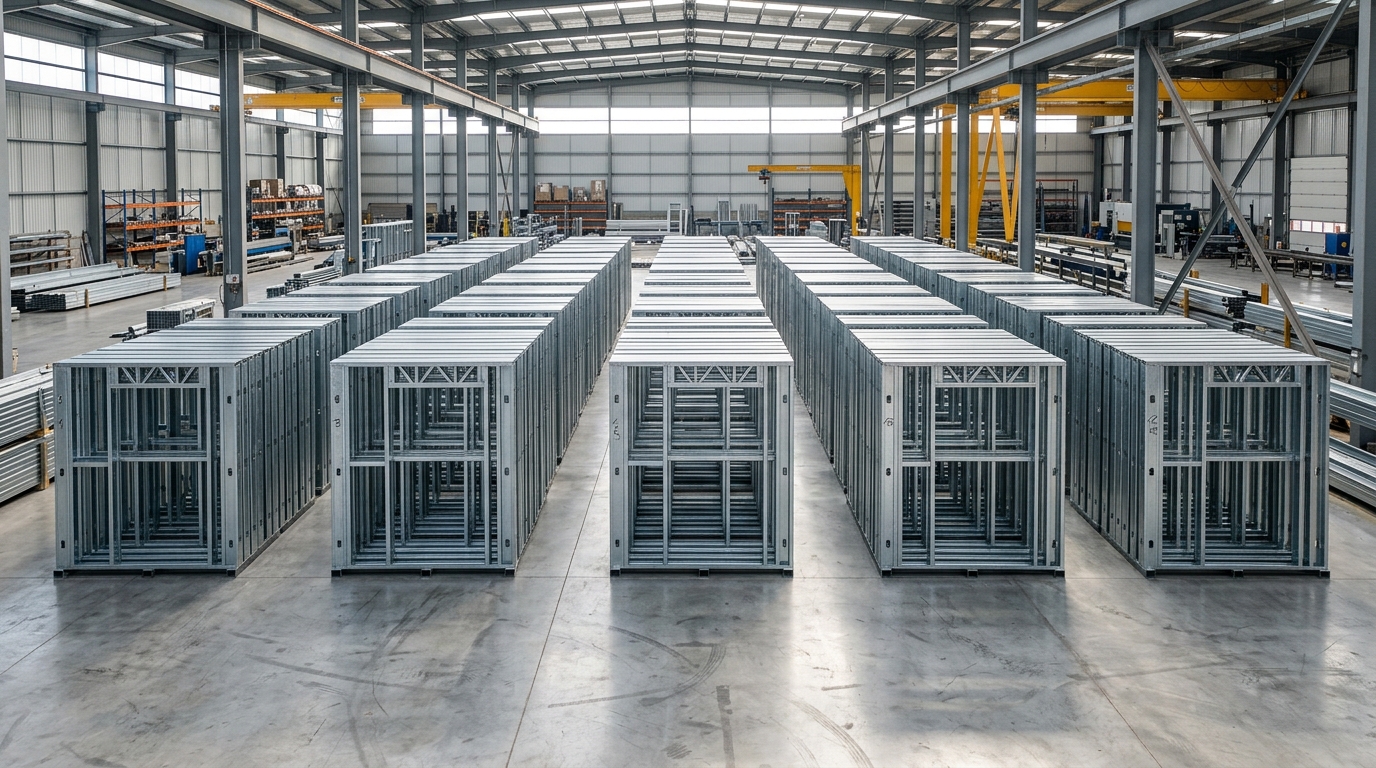

A commercial wall package can look correct on paper and still create lost hours in the field. When studs vary, tracks arrive out of tolerance, or fabricated components do not match the approved layout, installers are forced to cut, shim, rework, and wait. Precision metal framing reduces those risks by bringing consistency to the framing package before it reaches the job site.
For commercial builders in Central Florida, framing is not a commodity decision. It affects labor productivity, sequencing, structural performance, MEP coordination, and the ability to maintain a committed project schedule. The right fabrication partner supplies components that align with project documents and arrive ready for organized installation.
Why Metal Framing Accuracy Matters on Commercial Projects
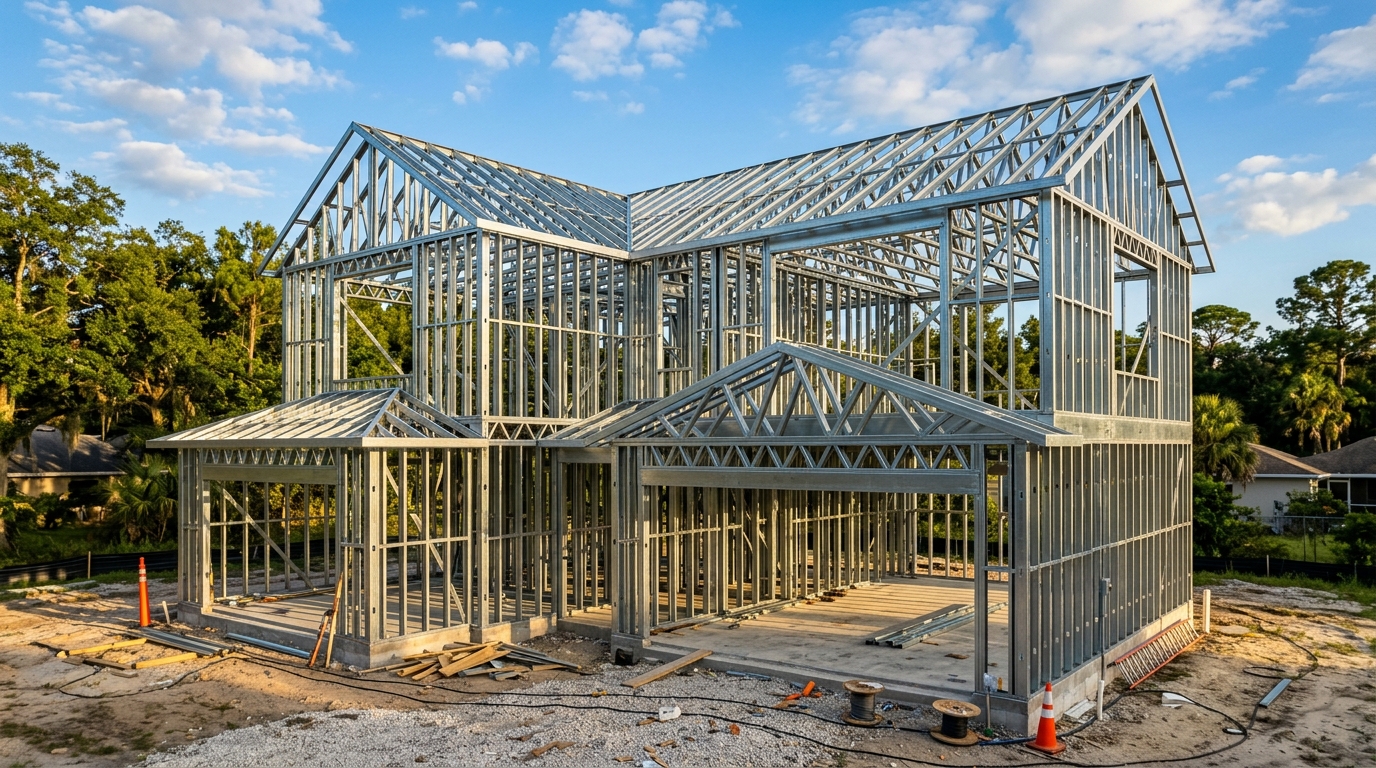
Light-gauge and structural framing systems carry more responsibility than simply defining room layouts. Depending on the application, they support exterior assemblies, interior partitions, soffits, load-bearing walls, shaft walls, parapets, and connections between building systems. Each application has different requirements for member size, steel thickness, coating, spacing, fastening, and deflection performance.
A small dimensional inconsistency can create a larger coordination problem. If a track is not straight, a stud is cut incorrectly, or a pre-fabricated assembly does not reflect the approved condition, the issue moves downstream. Drywall alignment, door openings, glazing interfaces, mechanical penetrations, and finish tolerances can all be affected.
The cost is rarely limited to the material itself. Field modifications consume skilled labor, interrupt production flow, and make it harder for superintendents to hold trade partners to sequence. For a project team managing multiple floors, phased turnover, or a compressed schedule, repeatable framing dimensions are a direct construction advantage.
Fabrication Quality Is Part of the Framing System
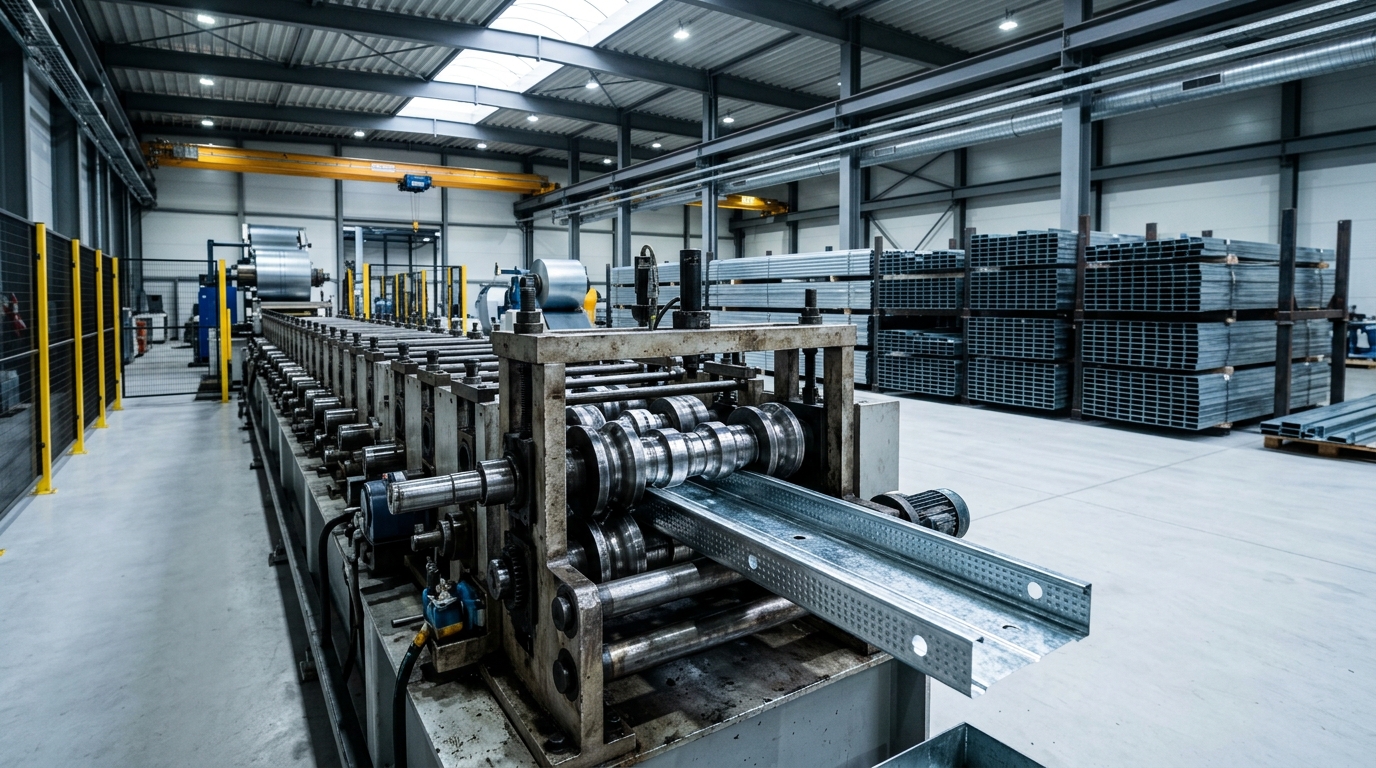
Commercial framing performance begins with design intent, but it is protected through fabrication control. A framing package should be manufactured to the specified profile, gauge, length, and configuration, with disciplined verification before release. This is particularly important where framing must integrate with structural steel, concrete, trusses, curtain wall, or pre-engineered components.
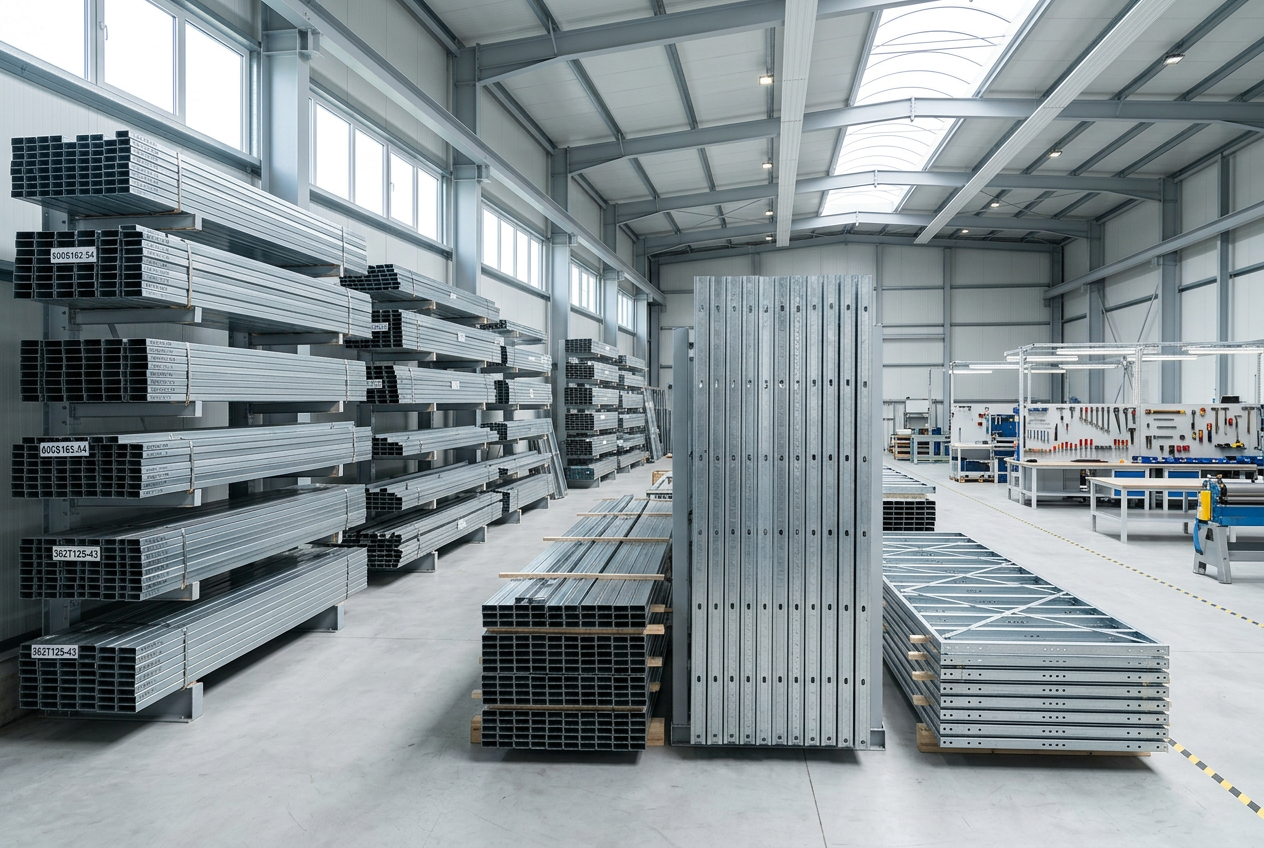
Quality-controlled fabrication helps contractors receive framing that is consistent from one bundle or assembly to the next. That consistency supports faster layout and installation because crews can work from dependable dimensions rather than continually checking and correcting material. It also improves predictability when repeated room types, corridor runs, exterior wall conditions, or standardized openings are part of the project.
Material consistency does not remove the need for field verification. Existing conditions, slab variation, delegated design requirements, and late coordination changes still require active job-site management. It does, however, reduce avoidable variation introduced at the manufacturing stage.
Light-Gauge Framing Requires the Right Level of Control
Light-gauge framing is commonly used for non-load-bearing partitions and many exterior or load-bearing applications when designed for the required loads. The term describes a broad family of cold-formed steel components, not one universal solution. A nonstructural interior stud system is not interchangeable with a load-bearing wall system, and neither should be selected solely on availability.
The framing package must reflect the approved drawings and relevant engineering. Stud depth, flange dimensions, gauge, spacing, bridging, track selection, headers, jamb conditions, and connections all influence performance. In exterior applications, the system must also accommodate insulation, sheathing, air and water barrier interfaces, cladding support, and expected movement.
Precision is especially valuable in long runs and repetitive conditions. A minor error repeated across dozens of units or multiple floors becomes a production issue. Accurate fabricated components help crews maintain line, plane, and opening dimensions across the building.
Structural Framing Systems Demand Coordination
Structural metal framing systems require a more deliberate review of loads, connections, and installation sequence. These systems may transfer gravity, wind, or other design loads into the primary structure. The framing fabricator, engineer of record, specialty engineer where applicable, general contractor, and installing contractor must be working from coordinated information.
A capable supplier does not replace the project design team. Instead, the supplier supports execution by producing specification-aligned components and identifying practical manufacturing considerations early enough to avoid disruption. Clear submittal processes, accurate takeoffs, disciplined production records, and traceability all contribute to a more controlled result.
What to Confirm Before Releasing a Framing Package
The most effective procurement process begins before purchase order release. Contractors and construction managers should confirm that the framing scope reflects the current approved documents, including addenda, architectural revisions, structural notes, and delegated design information. A material package based on an outdated plan set can be accurate to the wrong condition.
Start with system requirements. Confirm whether the application calls for nonstructural, load-bearing, curtain wall, or other specialty framing. Verify the required member sizes, thicknesses, coating requirements, and any fire-rated or acoustical assembly criteria. Where deflection track, slip connections, headers, or reinforcement are required, those details should be clearly identified rather than assumed.
Next, review dimensions and interfaces. Framing around openings, shafts, mechanical rooms, rooftop transitions, and irregular geometry deserves focused attention. These are the areas where a generic material approach most often produces excessive field work. If fabrication can address repetitive cuts, punched conditions, or project-specific assemblies, that opportunity should be evaluated against the installation plan.
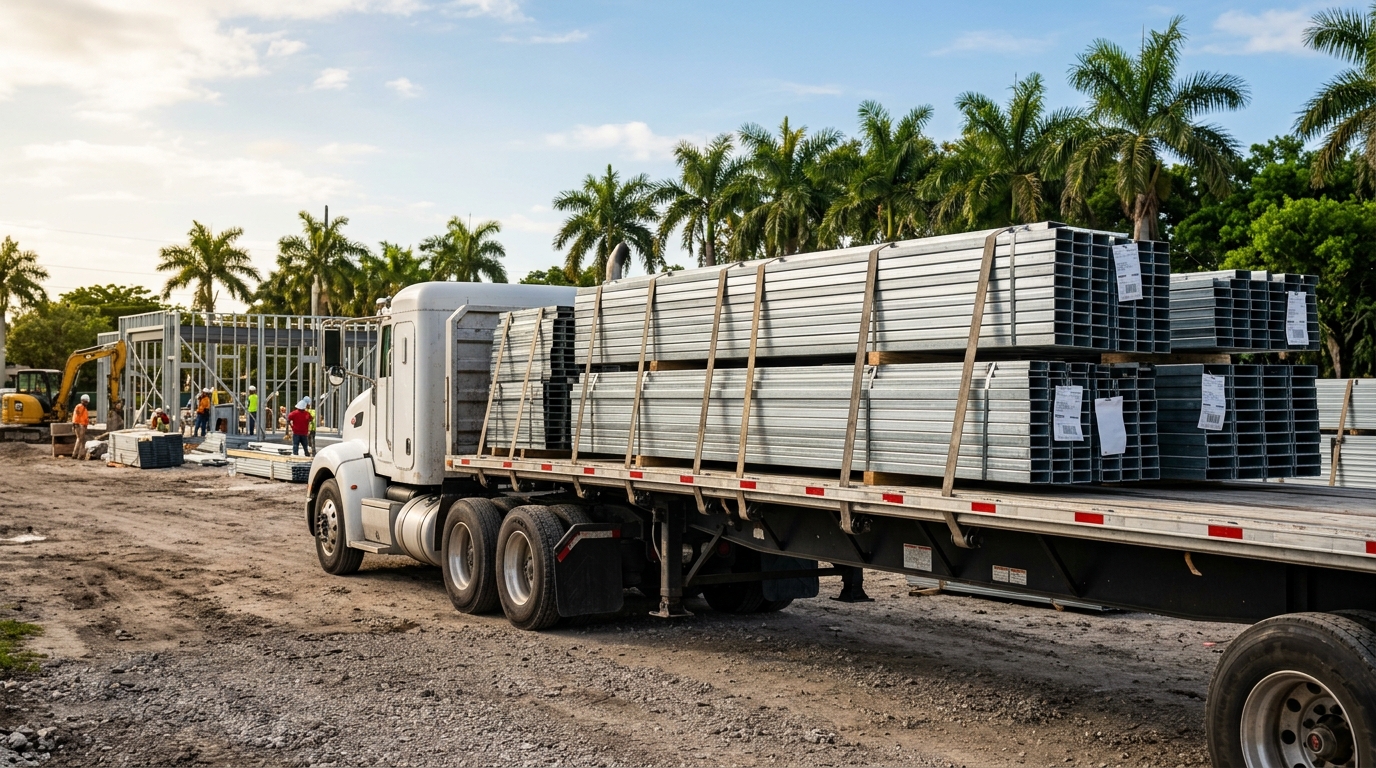
Finally, align delivery with the construction schedule. Early delivery is not always helpful if storage conditions are limited or material will be moved repeatedly. Late delivery can stop crews entirely. The preferred approach is a release and delivery plan that supports installation sequence, protects material, and gives the field team enough visibility to manage labor.
The Job-Site Value of Consistent Components
Installation efficiency is often discussed as a labor issue, but material quality has a direct effect on labor output. Crews work faster when studs fit track correctly, lengths are dependable, components arrive identifiable, and repetitive conditions remain repeatable. Supervisors can plan production with more confidence when framing material does not introduce preventable questions.
Consistent components also support cleaner coordination with other trades. Accurate framing locations and opening dimensions give mechanical, electrical, plumbing, fire protection, drywall, and finish teams a more reliable substrate. That does not eliminate the need for layout control or trade coordination, but it reduces the number of variables introduced by the framing package itself.
For general contractors, this translates into fewer disruptions that must be solved through meetings, change documentation, or schedule recovery. For subcontractors, it means a better chance to install to plan rather than spending time adapting material in the field. For owners, the benefit is a building assembled with greater discipline around the details that affect long-term performance.
Choosing a Metal Framing Manufacturing Partner
A commercial framing supplier should be evaluated on more than price per piece. Competitive pricing matters, but a low initial material cost can lose value quickly when inconsistent fabrication causes rework, delayed inspections, or labor inefficiency. The better comparison is total execution value: material accuracy, documentation, production capability, delivery reliability, and responsiveness when project requirements change.
Ask how the supplier controls dimensions and verifies fabricated output. Understand whether the team can produce both light-gauge and structural framing systems appropriate to the scope. Review its ability to support commercial quantities, schedule-driven releases, and project-specific requirements. A supplier should communicate clearly about what is included, what requires engineering review, and what information is needed to manufacture accurately.
VRD Metal Framing approaches this work as a precision fabrication responsibility. Quality-controlled framing components are intended to help commercial builders protect fit-up, maintain production, and install with confidence in the material package.
Precision Upstream Creates Control in the Field
The best framing packages make field execution less complicated, not more. They arrive aligned with the approved scope, organized for the work ahead, and manufactured with the consistency commercial construction demands. When schedule pressure increases, that discipline becomes visible in fewer modifications, steadier installation progress, and better control over the next trade in line.
Before the next framing release, treat fabrication accuracy as a project control point. The time spent confirming specifications, details, and delivery sequence can prevent far more costly adjustments once crews are working overhead, behind schedule, or alongside other active trades.