Florida's heat, humidity, and termites punish organic materials. Here's an honest, side-by-side look at how light-gauge steel framing compares to wood on Florida job sites.
The Florida Problem with Wood
Florida is one of the toughest environments in the country for wood framing. Year-round humidity causes lumber to swell, shrink, and warp as it dries. Subterranean termites are a constant pressure in Central Florida, and wood is their food source. Add fire risk and the dimensional movement that shows up later as cracked drywall and sticking doors, and the hidden costs of wood framing add up quickly.
None of this makes wood a bad material — it has framed American homes for a century. But every one of these weaknesses is a place where steel simply doesn't play the same game.
Where Steel Framing Wins
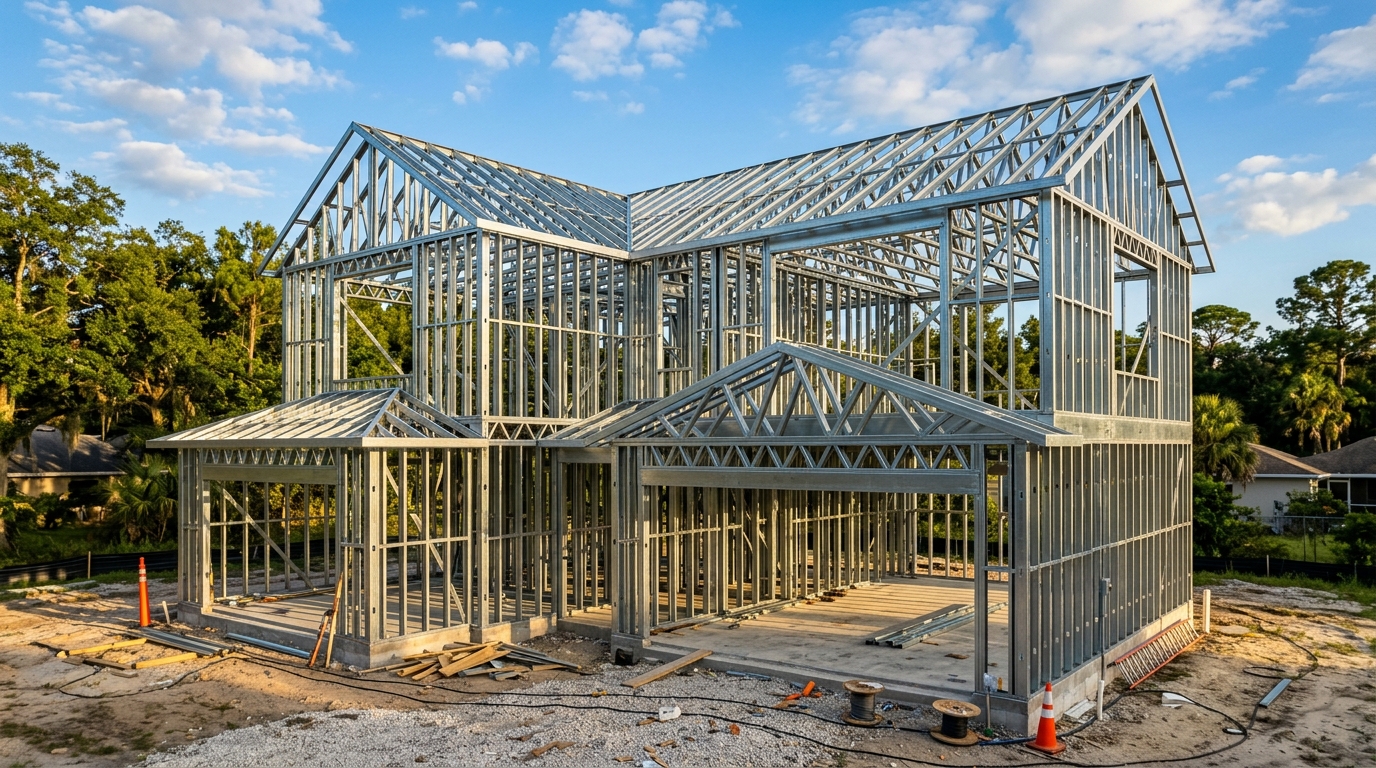
Light-gauge steel framing is dimensionally stable: it doesn't shrink, swell, warp, or split, no matter what the humidity does. It's non-combustible, so it never adds fuel to a fire. And it offers nothing for termites, carpenter ants, or mold to feed on. With galvanized coatings, it stands up to Florida's moisture for the life of the building.
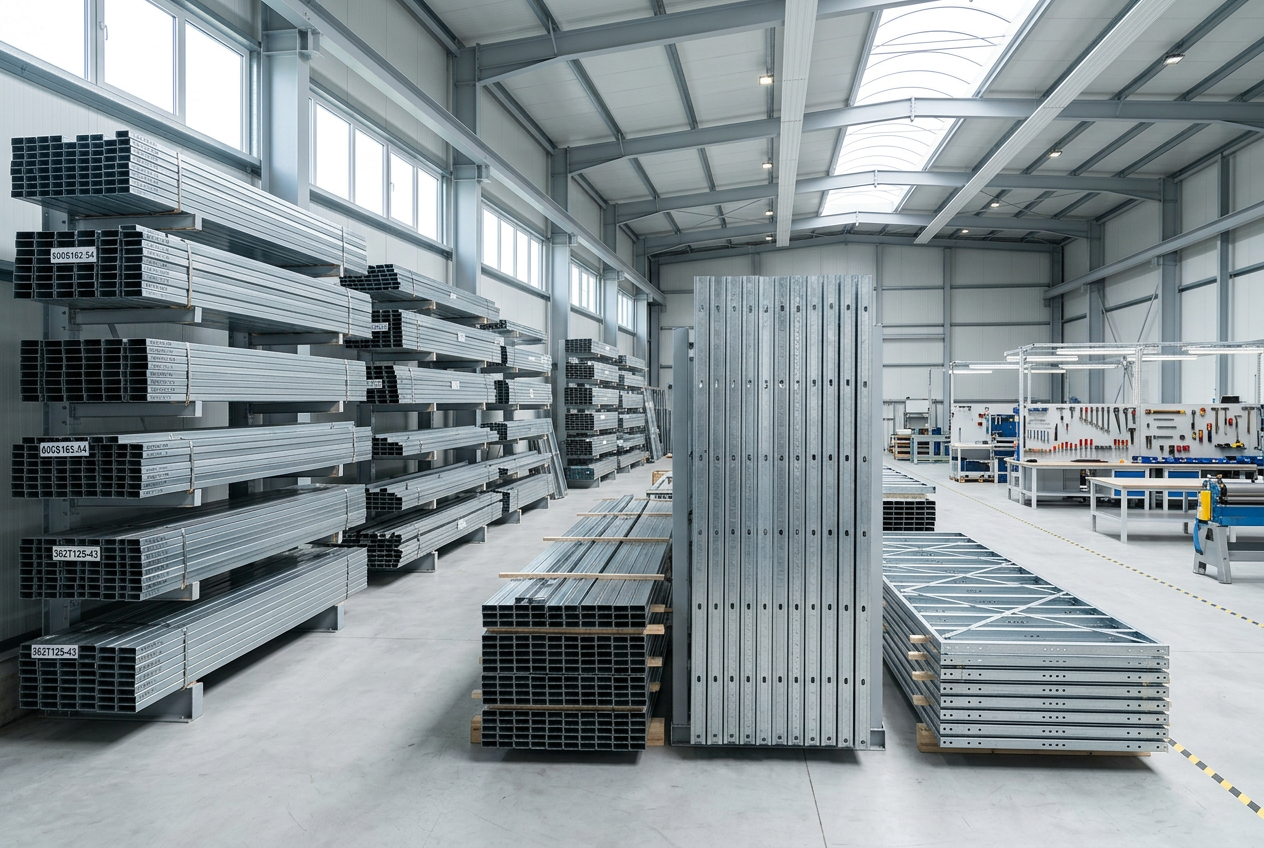
Because every member is roll-formed to exact lengths, walls come out dead straight and stay that way — which means cleaner finishes, fewer callbacks, and less time spent shimming and planing on site.
Cost, Schedule, and the Real Comparison
On material price alone, steel is competitive with lumber — and far more stable, without the price swings wood markets are known for. The bigger savings show up in the schedule: prefabricated, precisely cut members mean crews spend less time cutting and fitting, which compresses the framing phase and reduces waste on the lot.
For Florida builders weighing the switch, the practical path is simple: start with one project. A single steel-framed home or ADU is usually enough to make the difference obvious.