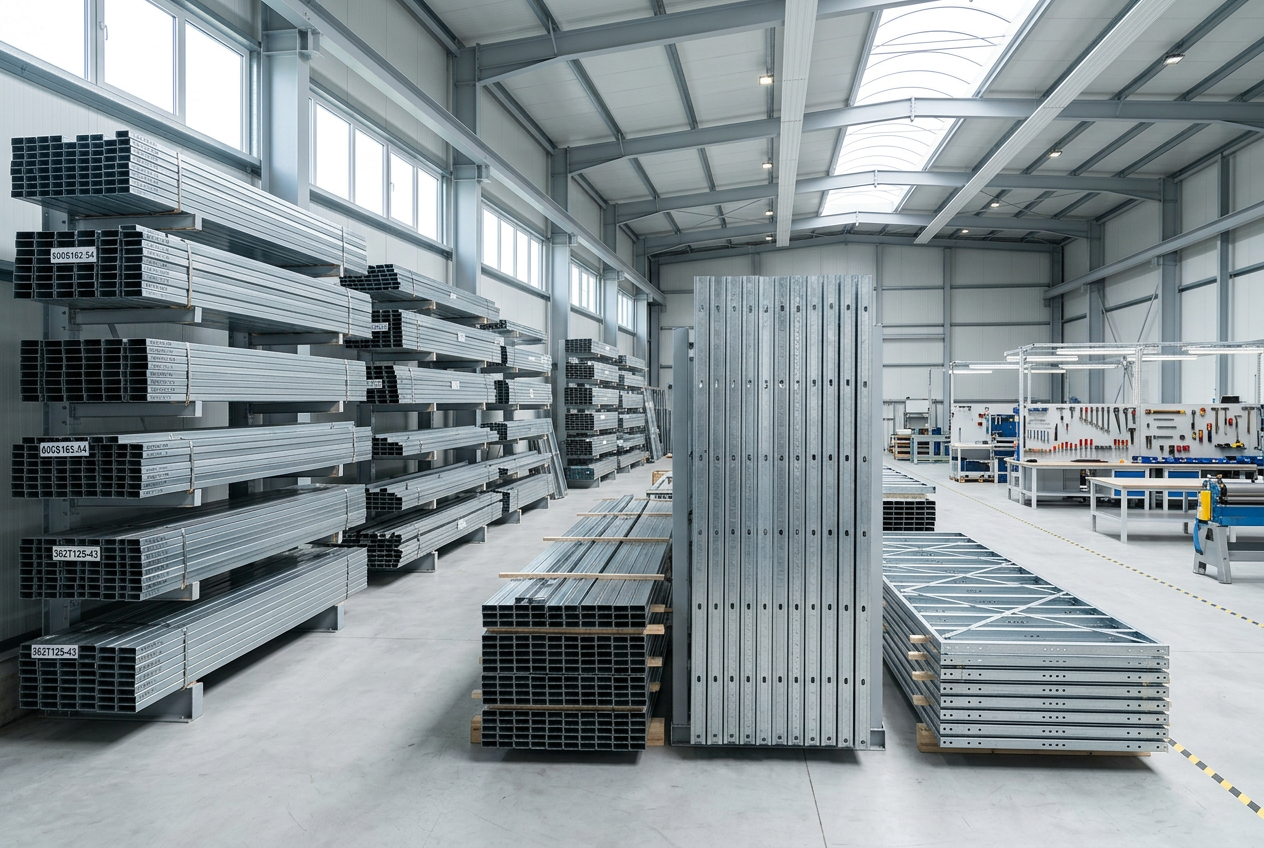
Cold-formed steel (CFS) is the backbone of modern light-gauge construction. Here's what it is, how it's made, and why engineers keep specifying it.
Formed Cold, Built Strong
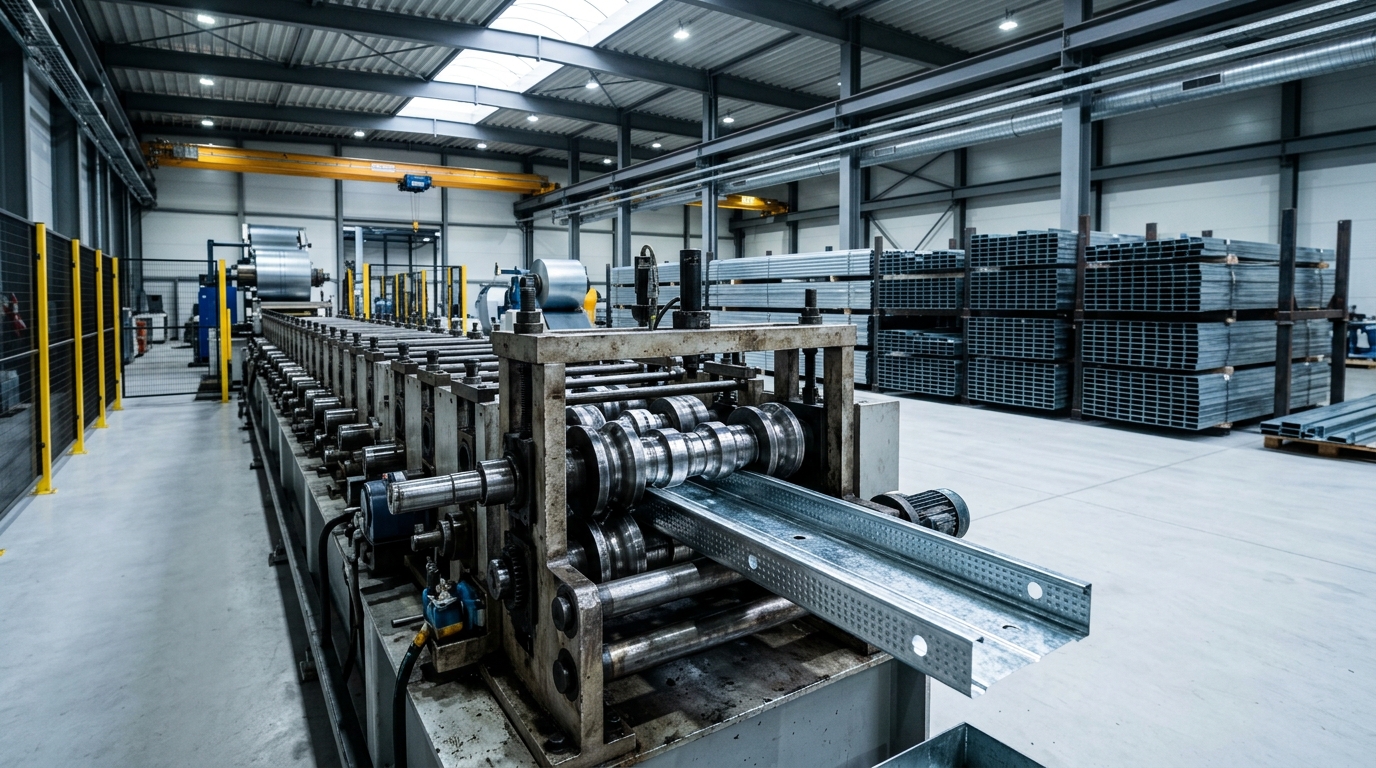
Cold-formed steel is structural steel shaped at room temperature. Thin coils of galvanized sheet steel are fed through roll-forming machines that bend them into precise C-shaped studs, tracks, and joists — no heat required. That's the difference from the hot-rolled beams you see in high-rise construction: same family, different process, and a much lighter member.
Because the material is formed cold, the bending process actually work-hardens the steel at the corners, adding strength exactly where the shape needs it most.
Why Engineers Specify It
The headline property is strength-to-weight ratio. Cold-formed steel carries serious structural loads at a fraction of the weight of other systems, which is why it serves as the primary structure in low- and mid-rise buildings — homes, hotels, offices, schools, and more.
It's also consistent. Every stud that comes off the line is identical: same dimensions, same straightness, same gauge. That uniformity is what makes precise panelization and fast, predictable erection possible.
Where You'll See It in Central Florida
Look at newer construction around Orlando and you'll find cold-formed steel in roof trusses spanning wide commercial spaces, in the wall panels of multifamily projects, in self-storage facilities row after row, and increasingly in single-family homes built to outlast Florida's climate.
As a manufacturer, we roll-form, panelize, and deliver these systems factory-direct — which means the material arriving at your job site was made to your drawings, not pulled from a generic rack.