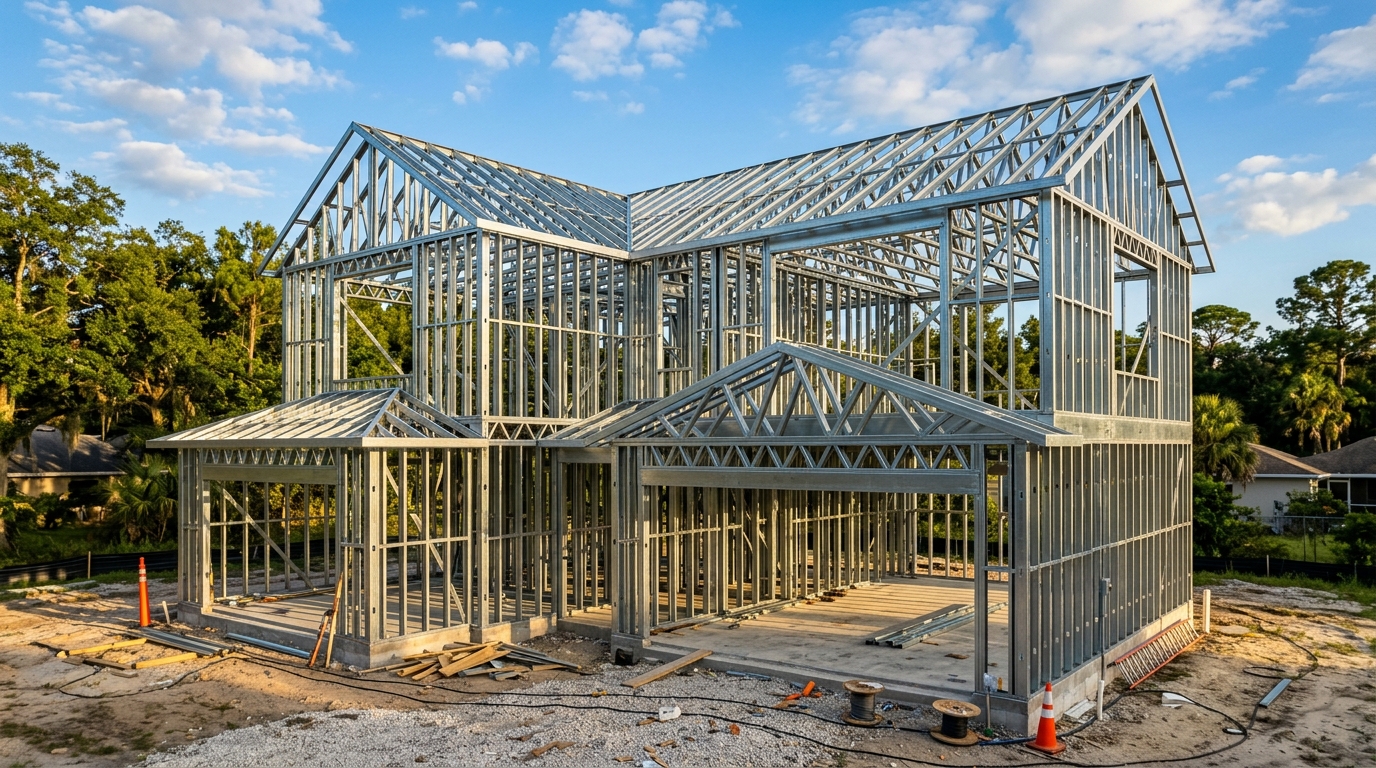
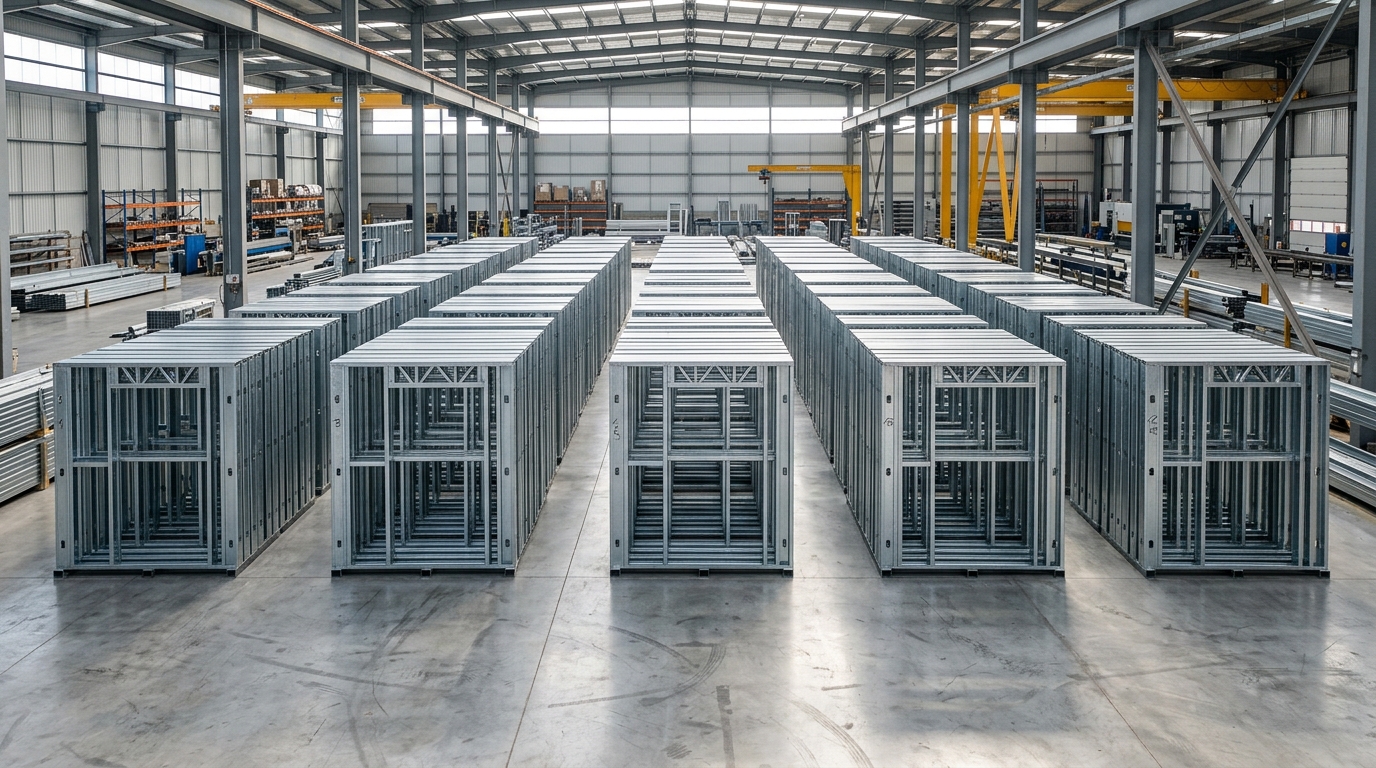

A framing package can appear complete on paper and still create jobsite problems when stud lengths vary, track does not match the layout, or fabricated components arrive without the information crews need to install them correctly. Commercial steel framing suppliers play a direct role in preventing those issues. The right supplier provides more than material availability - it provides precision-built components, disciplined quality control, and reliable coordination that support the construction schedule.
What Commercial Steel Framing Suppliers Should Deliver
For commercial work, steel framing is not a commodity purchase detached from project execution. Light-gauge and structural framing systems must align with approved drawings, design loads, connection requirements, wall assemblies, and field conditions. A supplier that understands commercial construction treats those requirements as production inputs, not details to sort out after material reaches the site.
That distinction matters most on projects with repeated room layouts, long corridor runs, high walls, exterior infill, shaft walls, soffits, and structural framing conditions. Small dimensional inconsistencies can multiply across hundreds or thousands of pieces. The resulting labor loss is rarely limited to one trade. It can affect drywall installation, MEP rough-in, door and glazing coordination, inspections, and turnover dates.
Precision fabrication reduces field correction
Field modification is sometimes necessary. Existing conditions vary, design revisions occur, and crews must solve legitimate conflicts. It should not become the standard installation method because components were fabricated without adequate control.
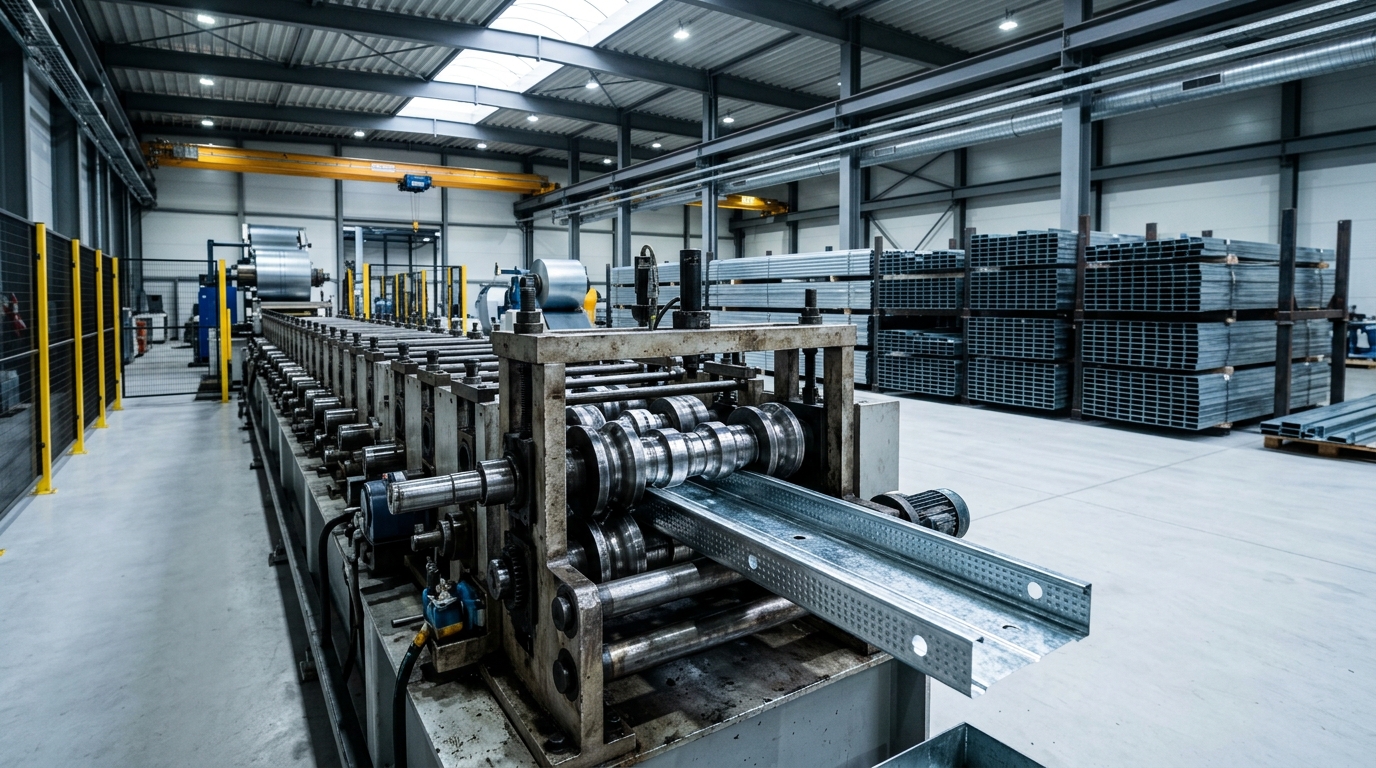
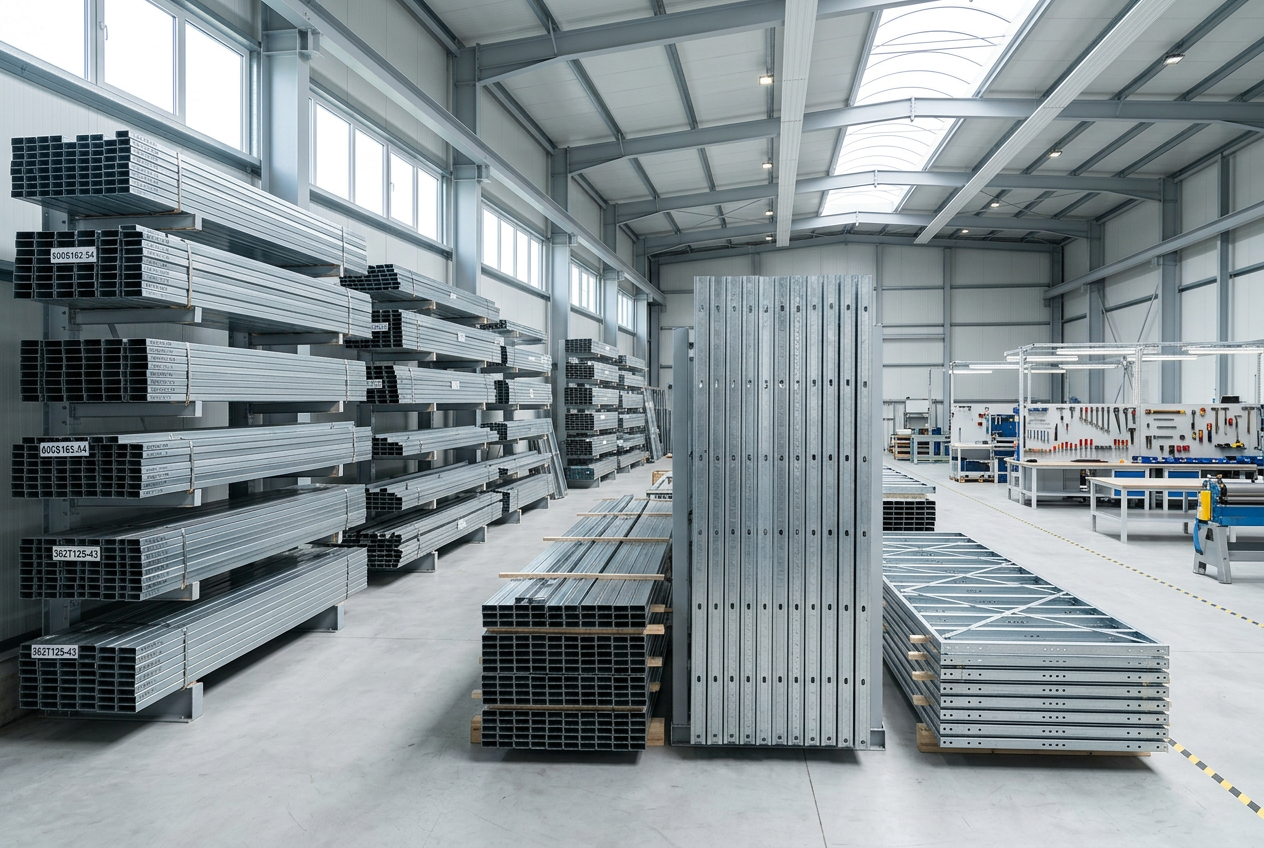
Precision-focused fabrication helps crews install framing according to the intended layout rather than spending time measuring, cutting, shimming, or replacing incorrect members. Accurate lengths, properly formed components, consistent profiles, and clear piece identification reduce opportunities for error before the first fastener is installed. On a schedule-driven commercial project, those gains are operational, not cosmetic.
Quality control must be visible in the process
Quality control is not simply a statement that products meet expectations. Builders and procurement teams should be able to see how a supplier protects consistency through material verification, production checks, dimensional review, packaging, and order tracking. The exact process will vary by component and project scope, but the principle remains the same: quality should be built into fabrication rather than left to final jobsite discovery.
A supplier should also maintain a clear path for resolving discrepancies. If a question arises about a component, lead time, drawing revision, or delivery sequence, the response needs to be specific and timely. Vague answers force field teams to make assumptions, and assumptions are expensive when they involve structural or rated wall assemblies.
How to Evaluate Commercial Steel Framing Suppliers
Price remains a relevant purchasing factor, but it cannot be evaluated in isolation. A lower material price can disappear quickly when a crew loses time correcting inconsistent components or waiting for replacements. Commercial buyers should assess the total execution value of the framing package: fabrication accuracy, documentation, delivery reliability, responsiveness, and the supplier's ability to support the specified system.
Start with project fit, not product categories
Many suppliers can provide standard studs and track. That does not mean each supplier is prepared to fabricate or coordinate the framing system required for a particular project. Begin by defining the scope clearly: light-gauge interior partitions, load-bearing framing, exterior wall infill, structural studs and track, cold-formed trusses, specialty openings, headers, clips, and other engineered components.
The supplier should understand where its responsibility begins and ends. Structural framing systems may require engineer-of-record coordination, approved shop drawings, delegated design, or specific connection details. A dependable manufacturing partner will not blur those requirements. Instead, it will identify the information needed to fabricate accurately and flag missing or conflicting details before production starts.
Review fabrication capability and tolerances
Commercial framing performance depends on repeatability. Ask how the supplier controls dimensions, forms components, identifies parts, and handles project-specific fabrication. The goal is not to demand a generic promise of precision. It is to understand whether the production process can reliably produce the components called for by the documents.
This is especially important when the project uses nonstandard stud depths, heavier gauges, punched patterns, slotted track, curved conditions, jamb assemblies, prefabricated panels, or other specialized work. Each added condition increases the value of an organized fabrication process. The supplier's capabilities should match the actual complexity of the project, not just the material list.
Confirm material and specification alignment
A framing system has to satisfy more than the dimensions shown on a takeoff. Material thickness, coating, yield strength, member configuration, fastening requirements, and applicable testing or listing criteria may all affect compliance. For rated or engineered assemblies, substitutions should be evaluated carefully rather than treated as equivalent based on appearance.
Commercial teams should provide current drawings, relevant specifications, approved details, and revision information early enough for meaningful review. In return, the supplier should be able to identify what it is furnishing and whether the requested components align with the stated scope. This early coordination is less disruptive than discovering a mismatch after framing has begun.
Delivery Planning Is Part of Framing Performance
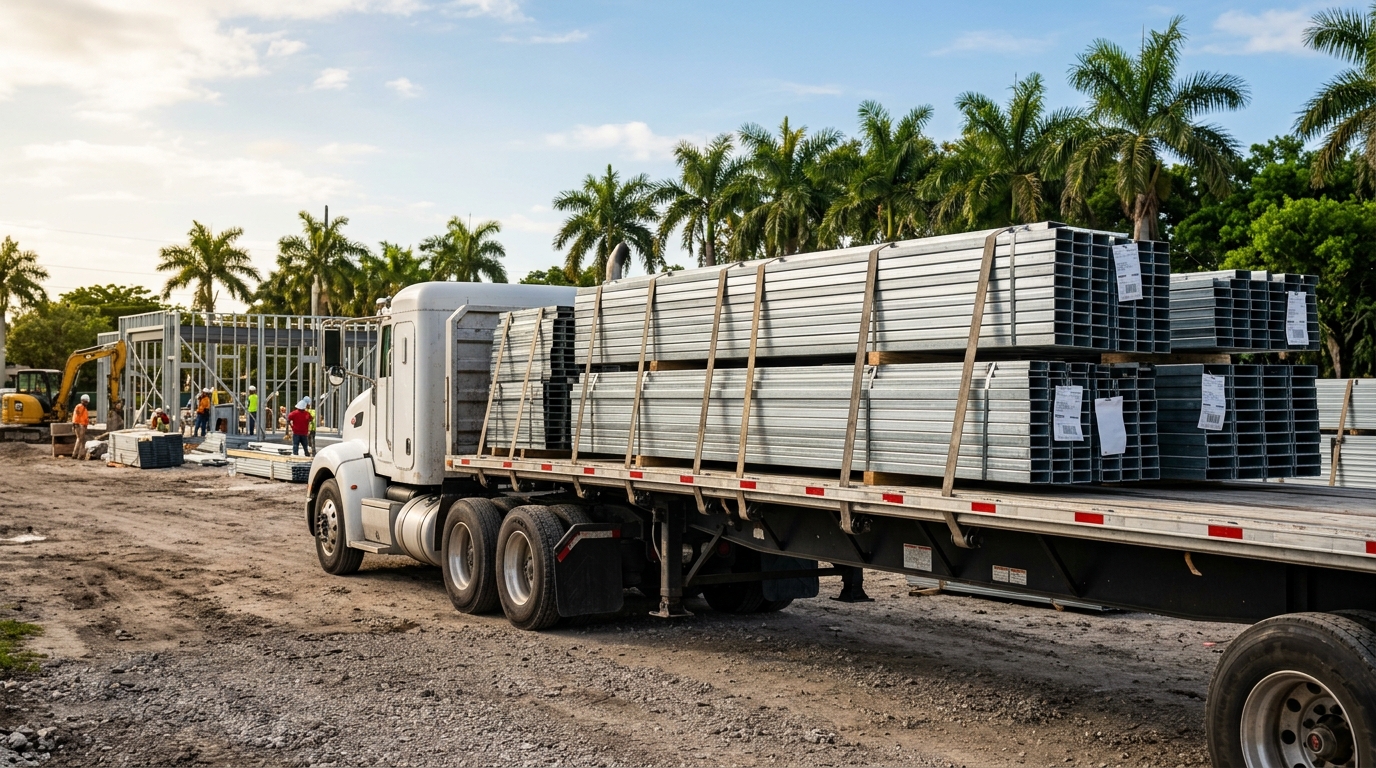
Material can be correctly fabricated and still create schedule pressure if it arrives in the wrong sequence. Commercial sites often have restricted laydown areas, limited loading windows, active trades, and phased construction plans. Delivery planning should reflect those conditions.
A useful supplier conversation includes release dates, building areas, floor-by-floor sequencing, unloading constraints, packaging needs, and the lead time required for changes. The contractor should not have to accept a one-size-fits-all delivery approach when the project requires staged releases. Coordinated releases can reduce double handling, protect materials, and help crews receive what they need without overwhelming the site.
Revision control protects the field team
Design changes are common, particularly before and during early framing phases. The risk is not that revisions occur. The risk is that outdated information stays in circulation and drives fabrication or installation.
A disciplined supplier tracks the drawings and revisions used for production, communicates changes that affect committed material, and confirms the path forward when updated documents arrive. Contractors should establish a single point of contact for releases and revisions whenever possible. Clear ownership reduces the chance that a superintendent, estimator, subcontractor, and supplier are working from different versions of the same detail.
Responsiveness matters when conditions change
No commercial project runs exactly as planned. A late opening change, a missing detail, damaged material, or an unexpected field condition can require quick action. Suppliers cannot eliminate every disruption, but their response process can determine whether a problem becomes a short adjustment or a multi-day delay.
Look for a partner that communicates practical next steps: what information is needed, what can be produced, when it can ship, and what alternatives may be available. Reliable communication is particularly valuable when the framing package supports follow-on trades with fixed mobilization dates.
Choosing a Manufacturing Partner for Long-Term Work
For builders and contractors managing repeat commercial work, supplier selection should extend beyond a single bid. Consistent fabrication and dependable service improve estimating confidence, labor planning, and project closeout across an entire portfolio. The supplier learns how your team releases work, manages changes, and sequences installations. Your team learns what information the supplier needs to deliver accurately.
That working rhythm does not replace formal documentation or project-specific review. It does, however, reduce avoidable friction. VRD Metal Framing approaches commercial supply as a precision manufacturing responsibility, with quality-controlled light-gauge and structural framing systems built to support disciplined construction execution.
The practical test is straightforward: choose the supplier that helps your field team install with confidence, not the one that leaves them solving preventable material problems under schedule pressure.